Table of Contents
Mainland vs Freezone in the UAE is one of the most important decisions entrepreneurs face when starting a business in the United Arab Emirates. Choosing the right setup impacts ownership structure, legal compliance, taxation, market access, and long-term growth.
Starting a business in the UAE requires careful evaluation of where and how to establish your company. Among the most critical choices is whether to operate in the mainland or a free zone. Each option offers distinct advantages and limitations that can significantly affect your business strategy and success.
1) What Is Mainland Business Setup in the UAE?
Mainland companies are licensed by the Department of Economic Development (DED) or equivalent authorities in each emirate. They allow businesses to operate anywhere in the UAE market, including local onshore commerce and public sector contracts.
Mainland setup provides:
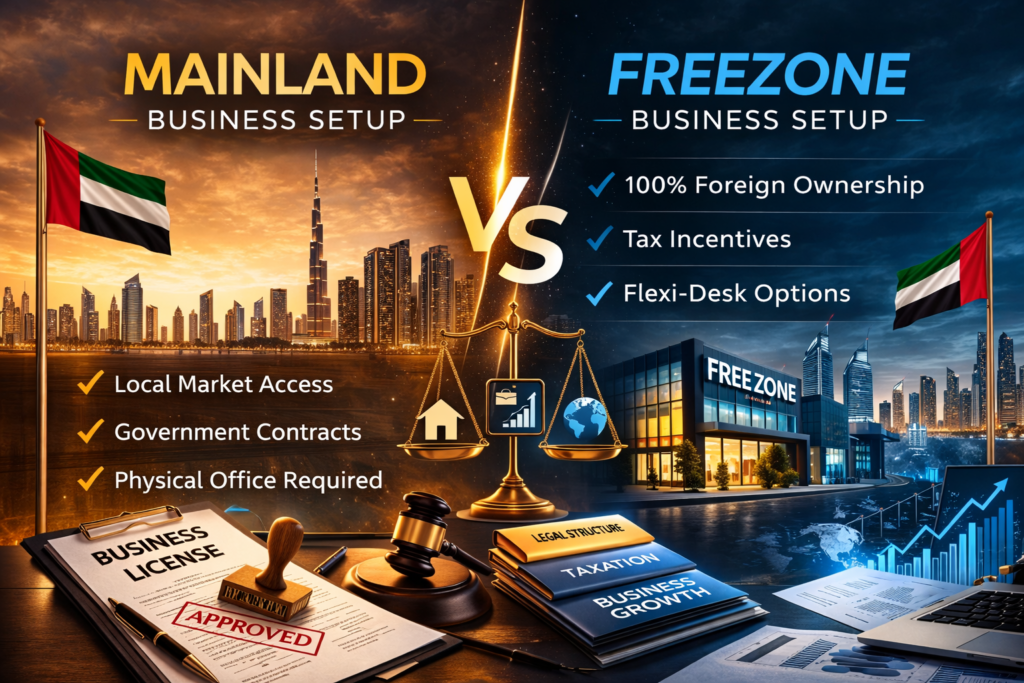
- Access to the local UAE market without restrictions
- Ability to trade directly with government entities
- Flexibility in office location and business activities
For legal requirements and how corporate law impacts mainland operations, see:
Business setup & Corporate Law in Dubai
https://laws.ae/business-setup-in-dubai-corporate-law/
2) What Is a Free Zone Business Setup?
Free zones are designated economic areas that offer specialized regulatory frameworks designed to attract foreign investment. There are over 40 free zones across the UAE, including popular options such as:
- Dubai Multi Commodities Centre (DMCC)
- Jebel Ali Free Zone (JAFZA)
- Abu Dhabi Global Market (ADGM)
Free zone companies typically provide:
- 100% foreign ownership
- Tax incentives
- Simplified immigration and visa processes
However, free zone entities may face restrictions when conducting direct onshore business within the UAE, often requiring local distributors or service agents.
3) Legal Ownership Differences
One of the biggest contrasts between mainland and free zone setup is legal ownership.
Mainland
Previously, many mainland activities required a UAE national holding majority ownership. Recent amendments to UAE company law now allow full foreign ownership in most sectors, subject to regulatory approvals and compliance requirements.
Free Zone
Free zone companies almost always allow 100% foreign ownership, making them particularly attractive for international investors and entrepreneurs.
For legal structures and shareholder protection mechanisms, explore:
Business setup & Corporate Law in Dubai
https://laws.ae/business-setup-in-dubai-corporate-law/
4) Office and Physical Presence Requirements
Mainland
Mainland companies generally require a physical office space licensed by the relevant local authority. This ensures regulatory compliance and supports broader commercial activities.
Free Zone
Free zone authorities often provide flexible office solutions, including flexi-desks and virtual offices, which can reduce initial setup costs for startups and small businesses.
5) Tax and Financial Considerations
The UAE has introduced corporate tax, value-added tax (VAT), and other regulatory obligations that apply to both mainland and free zone companies. While free zones have traditionally offered tax advantages, corporate tax regulations may apply depending on the company’s activity and economic substance.
According to the UAE Ministry of Economy, companies operating in the UAE must comply with licensing, corporate governance, and regulatory requirements set by federal and local authorities.
👉 https://www.moec.gov.ae/en/business
6) Visa and Employment Flexibility
Mainland
Mainland companies can sponsor visas for investors and employees under broader conditions, with visa quotas often linked to office size and business activity.
Free Zone
Free zones typically offer streamlined visa processes but may impose limitations on employment outside the free zone without additional approvals.
7) Business Activity and Client Reach
Mainland
- No restrictions on trading within the UAE market
- Eligibility to bid for government contracts
- Ability to operate nationwide without intermediaries
Free Zone
- Ideal for export-oriented and international businesses
- May require local distribution partners to access the UAE onshore market
8) Regulatory Compliance and Legal Frameworks
Both mainland and free zone companies must comply with UAE commercial laws and regulatory frameworks, including:
- Corporate tax readiness
- Economic Substance Regulations
- Anti-Money Laundering (AML) standards
- Shareholder and corporate governance obligations
For long-term legal strategy, risk mitigation, and compliance planning, refer to:
Business setup & Corporate Law in Dubai
https://laws.ae/business-setup-in-dubai-corporate-law/
9) Which Option Is Right for You?
There is no universal answer. The optimal choice depends on:
- Your target market (local UAE vs international)
- Ownership and partnership structure
- Capital and operational requirements
- Visa and staffing needs
- Long-term growth strategy
Free zones often suit export-focused or single-owner businesses, while mainland setup is preferred for companies seeking full access to the UAE market.
Final Thoughts
Choosing between mainland and free zone is one of the most critical decisions a founder can make in the UAE. Understanding the legal implications, regulatory requirements, and operational flexibility of each option is essential for strategic planning and sustainable business growth.
Call to Action
Get professional legal advice for your UAE business setup.
Connect with Laws.ae to ensure your legal structure, compliance framework, and strategic planning are fully optimized for growth and protection.