Table of Contents
Business Setup in Dubai: Legal Steps, Costs, and Mistakes to Avoid in 2026
Dubai has become one of the world’s most attractive destinations for entrepreneurs and investors. With its strategic location, business-friendly regulations, and tax advantages, thousands of companies choose Dubai every year to launch or expand their businesses.
However, starting a business in Dubai requires understanding the legal framework, choosing the right jurisdiction, and avoiding common legal mistakes that many new entrepreneurs make.
In this guide, we will explore the legal steps, key considerations, and practical tips for setting up a business in Dubai successfully.
Why Dubai Is One of the Best Places to Start a Business
Dubai offers multiple advantages for entrepreneurs:
- Strategic global location between Europe, Asia, and Africa
- 0% personal income tax
- Access to world-class infrastructure
- A strong legal and financial system
- Multiple business setup options including mainland and free zones
Because of these benefits, many international entrepreneurs consider Dubai the ideal hub for launching startups and expanding global operations.
Mainland vs Freezone: Which Is Better?
One of the most important decisions when starting a business in Dubai is choosing between mainland and free zone.
Mainland companies allow businesses to operate across the UAE market without restrictions, while free zones provide benefits like full foreign ownership and simplified registration procedures.
If you’re unsure which structure fits your business model, read our full legal comparison:
➡️ https://laws.ae/mainland-vs-freezone-uae/
This detailed guide explains the legal differences, costs, and benefits of each option.
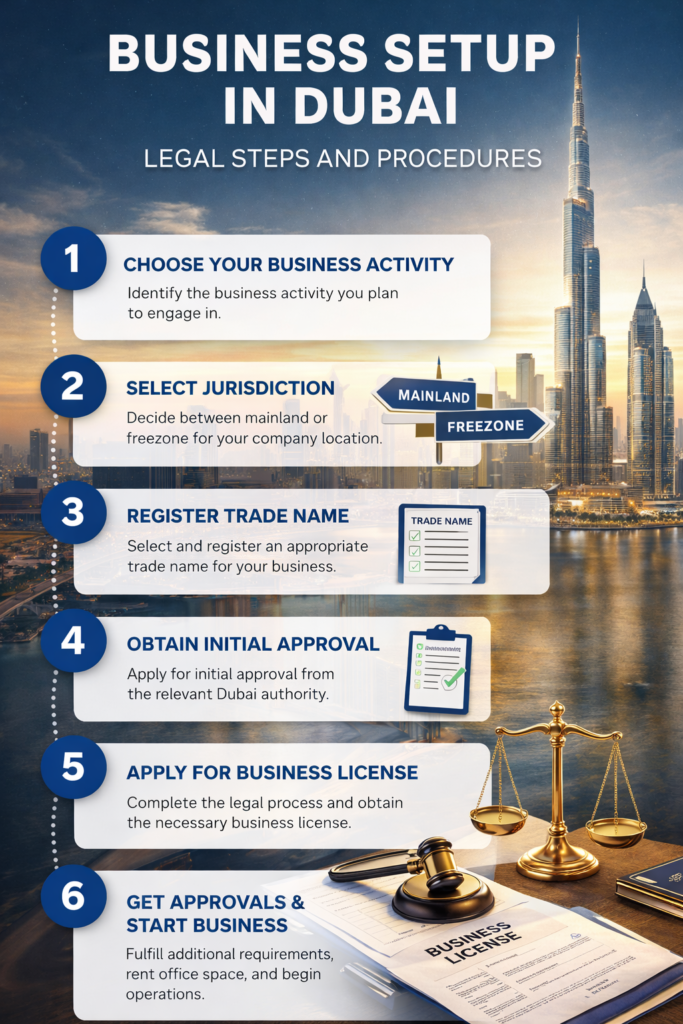
Legal Steps to Start a Business in Dubai
Starting a business in Dubai typically involves several legal steps:
1. Choose Your Business Activity
You must select a licensed business activity approved by the Department of Economy and Tourism.
2. Select the Right Jurisdiction
Choose whether your business will operate in:
- Mainland
- Free zone
- Offshore
3. Register Your Trade Name
Your company name must follow UAE legal regulations and be approved by the authorities.
4. Obtain Initial Approval
This confirms that the government has no objection to your business activity.
5. Apply for a Business License
Depending on your activity, you may need:
- Commercial License
- Professional License
- Industrial License

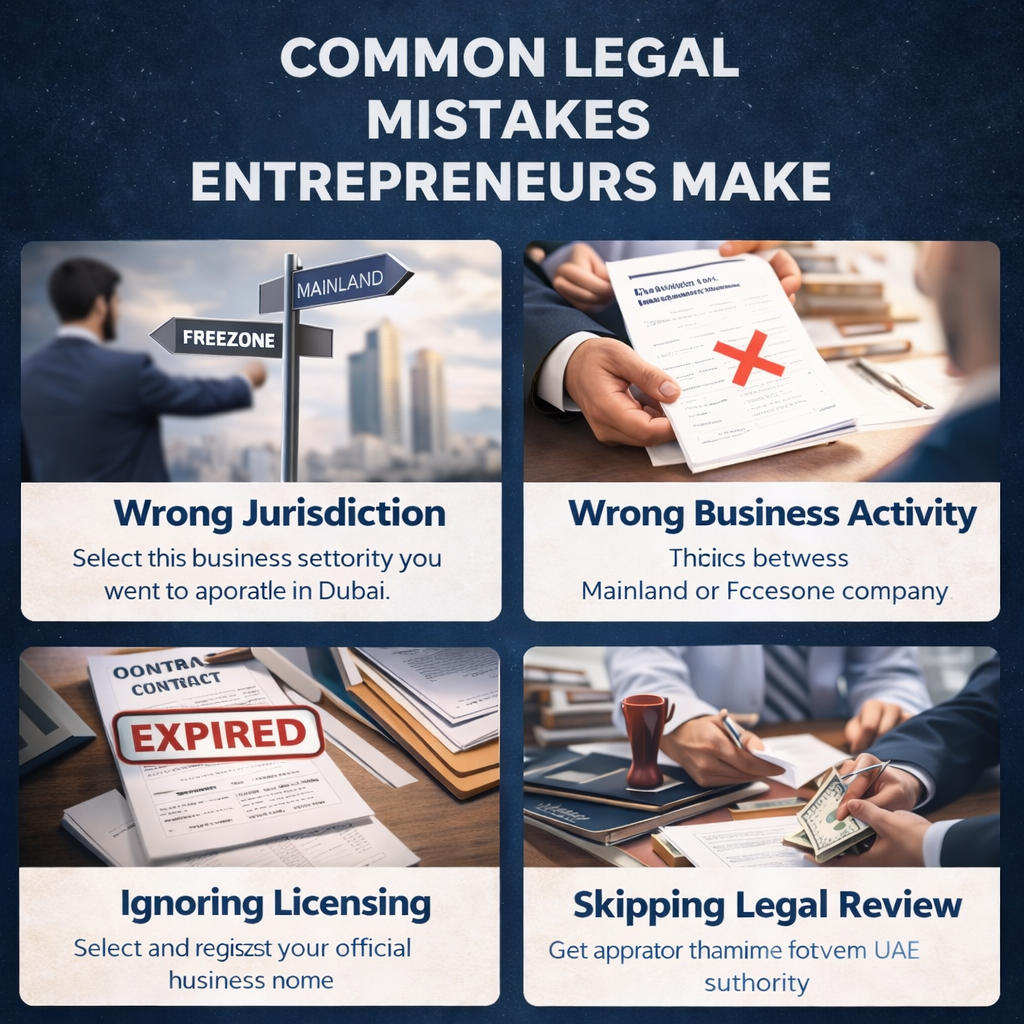
Common Legal Mistakes Entrepreneurs Make
Many entrepreneurs rush into company formation without understanding the legal implications. This often leads to costly mistakes.
Some of the most common mistakes include:
- Choosing the wrong jurisdiction
- Selecting an incorrect business activity
- Ignoring licensing requirements
- Signing contracts without legal review
- Misunderstanding ownership rules
We explained these issues in detail in our recent guide:
➡️ https://laws.ae/business-setup-in-dubai-legal-mistakes/
Avoiding these mistakes can save businesses significant time, money, and legal complications.
Business Laws and Regulations in the UAE
Dubai operates under a structured legal framework that regulates commercial activities. Understanding these laws is crucial for compliance and long-term success.
Entrepreneurs should review official business regulations from government sources such as:
➡️ https://u.ae/en/information-and-services/business
This official UAE government portal provides detailed information about business regulations, licensing, and investment opportunities.
For a deeper understanding of how taxation affects businesses operating in the UAE, you can also read our guide on UAE Corporate Tax Dubai:
➡️ https://laws.ae/uae-corporate-tax-dubai/
Why Legal Guidance Matters for Business Setup
Although Dubai offers a streamlined company formation process, legal guidance can make a significant difference.
Professional legal support helps entrepreneurs:
Choose the correct business structure
Draft legally compliant contracts
Understand regulatory obligations
Avoid costly legal disputes
Legal planning is especially important for foreign investors unfamiliar with the UAE legal system.th UAE corporate laws.
Final Thoughts
Dubai continues to attract global entrepreneurs thanks to its strong economy, investor-friendly policies, and world-class infrastructure. The city has positioned itself as a global hub for innovation, trade, and international investment, making it an ideal destination for startups, SMEs, and multinational companies looking to expand into the Middle East.
However, successful business setup in Dubai requires careful legal planning and a clear understanding of UAE regulations. Entrepreneurs must evaluate important factors such as business structure, licensing requirements, jurisdiction selection, and regulatory compliance before launching their operations. Making informed decisions at the beginning can help avoid costly legal complications later.
In addition, understanding the differences between mainland companies, free zone businesses, and offshore structures plays a critical role in determining how a company can operate within the UAE market and internationally.
By choosing the right business structure, following the correct legal steps, and avoiding common mistakes, entrepreneurs can build a strong and sustainable company in Dubai. With the right legal guidance and proper preparation, starting a business in Dubai can become a powerful opportunity for long-term growth, global expansion, and financial success.
For entrepreneurs planning to establish their company in the UAE, taking the time to research legal requirements and seek professional advice can make the difference between a smooth business launch and unnecessary challenges.